.png)
.png)
The Paradox of Copyright and Popular Media by Kushraj Singh Jaoli
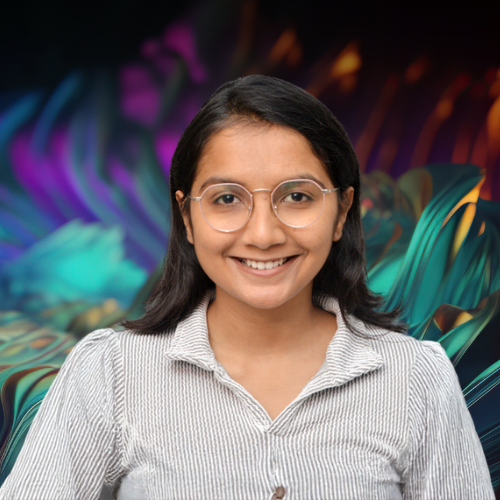

The Paradox of Copyright and Popular Media by Kushraj Singh Jaoli, Senior Legal Correspondent at Northon’s Media PR & Marketing, UK.
In The Global IP Magazine Issue 25, Kushraj Singh Jaoli, Senior Legal Correspondent at Northon’s Media PR & Marketing, UK, explores the increasingly complex relationship between artificial intelligence, copyright, and popular media. As generative AI transforms how books, images, scripts, music, and other creative works can be produced, the article examines a defining paradox: creation is becoming easier and more accessible, while questions surrounding authorship, ownership, and infringement are becoming increasingly difficult to resolve.
The Conflict Between AI Inputs and Outputs
At the centre of the debate is a fundamental distinction between the copyrighted material used to train AI systems and the content those systems subsequently generate. AI developers may argue that training models on existing works can fall within principles such as fair use, while authors and other rights holders continue to challenge the unauthorised use of their creative works.
The issue becomes even more complicated when an AI-generated output closely resembles protected characters, stories, imagery, or other original expression. Although an AI system may not reproduce a work exactly, substantial similarities can still raise questions around derivative works and copyright infringement.
Who Is the Author of AI-Generated Content?
The article also examines one of the most significant unresolved questions surrounding generative AI: who, if anyone, owns the resulting work?
Approaches differ considerably between jurisdictions. In the United States, copyright protection generally requires sufficient human authorship, meaning purely AI-generated material may not qualify for protection. The UK takes a different approach to certain computer-generated works by assigning authorship to the person responsible for making the necessary arrangements.
These differences create significant uncertainty for media companies and creators seeking to incorporate AI-generated assets into commercially valuable projects. If content cannot obtain meaningful copyright protection, businesses may face greater risks of copying and unauthorised exploitation.
Style, Expression, and the Creative Grey Area
Another major challenge lies in copyright law's distinction between artistic style and protected expression. Copyright generally protects the particular expression of an idea rather than an artist's broader style or aesthetic.
Generative AI can reproduce the recognisable characteristics of an artist's work with increasing accuracy without necessarily copying a specific protected work. This creates a difficult legal and ethical grey area: an AI-generated work may avoid traditional infringement thresholds while still competing directly with the creator whose distinctive aesthetic helped shape the output.
For artists, writers, and other creative professionals, this raises wider concerns about whether existing copyright frameworks are sufficiently equipped to protect creative identity and economic livelihoods in the AI era.
From Hollywood to the Courts
The tension between AI and human creativity has become particularly visible across publishing, film, and entertainment. Concerns surrounding digital replicas, AI-generated scripts, synthetic voices, and the use of copyrighted works for model training have pushed questions of consent and compensation into the spotlight.
High-profile litigation involving authors and AI companies further illustrates the scale of the dispute. Rights holders argue that copyrighted works should not be used without permission to develop technologies capable of producing competing content, while AI companies continue to defend the transformative nature of machine learning.
Cases involving AI-generated visual works have also demonstrated how difficult it can be to determine where human creativity ends and machine generation begins, particularly when copyright protection depends on the extent of meaningful human creative control.

A Global Copyright Challenge
The debate extends far beyond the United States and Europe. India is emerging as another important arena for AI and copyright disputes, with litigation and policy discussions raising questions around training data, licensing, authorship, and creator compensation.
As jurisdictions develop different approaches, the creative industries face an increasingly fragmented global landscape. The challenge will be finding a framework that encourages technological innovation without undermining the rights and livelihoods of the creators whose works contribute to the development of AI systems.
Ultimately, the article highlights a striking contradiction at the heart of generative AI: technology may be democratising the ability to create content, yet the legal and economic complexities surrounding ownership could make protecting that creativity more difficult than ever.
Conclusion
As Jaoli highlights, the rise of generative AI has created a fundamental tension between technological innovation and established principles of copyright. As creation becomes faster and more accessible, questions of human authorship, ownership, consent, and fair compensation are becoming increasingly complex. The future of popular media will depend on finding a balance that enables AI innovation while preserving meaningful protection for human creativity.
Read the full article in The Global IP Magazine Issue 25 to explore how generative AI is challenging traditional concepts of authorship, ownership, and copyright protection across popular media.


Comments